
Chris Matthews


Hamilton Jordan, Jimmy Carter's top campaign aide,
refused to do either and paid for it. Almost a quarter of a
century later, it is his punishment that most people
remember.
The Washington Post delivered the first blow. After
calling him the capital's "second most important man," it
ran an item that suggested this country boy from Georgia
didn't deserve that status. It had the president's No. 1
man looking down the dress of the Egyptian ambassador
and saying, "I have always wanted to see the pyramids."
A more deadly accusation followed. A pair of New York
nightclub owners, spotting their prey, told police that
Jordan had snorted cocaine at Studio 54, then a popular
Manhattan disco. Their lawyer was the nefarious Roy
Cohn, the late dirt-balling, long-ago chief counsel to
Senator Joseph McCarthy.
Exonerated by a unanimous 24-to-0 grand jury decision,
the Carter aide found himself with his hell-raiser's
reputation notched up menacingly high.
"At least there was a grand jury for Roy Cohn," Jordan says.
He gives a fatalistic sigh.
"There wasn't a grand jury for the pyramid story. To the extent that I cared
about my public reputation — and at some level, I certainly did — I knew that
it would be forever tainted by these silly accusations. These things stick to you,
and they're there forever."
Jordan says he accepts some blame for letting a "highly unattractive image" of
himself take form here, one that Roy Cohn types could use to hurt him. "I had
never been a public person and had trouble thinking of myself as one," he
writes in his new book.
The book is about survival of another kind. Titled "No Such Thing as a Bad
Day," it is Hamilton Jordan's first-person account of his three-time bout with
cancer — lymphoma, skin and prostate — all before age 50.
Like others who have left high-level politics to face more authentic, personal
crises — Chuck Colson's trip to federal prison comes to mind — Jordan found
the experience morally edifying.
"There's a lot of politics today that's artificial. It certainly looks that way from
the outside today, and when I think back to my days in politics, it's almost
surreal. It's almost like it never happened."
More surreal is Jordan's ghastly account of his nocturnal visit down the hall of
the National Cancer Institute here, where Roy Cohn was dying of AIDS.
"I stood there with my head poked inside the door for a few seconds, unable to
enjoy his plight, seeing only another human being wasted by disease."
I will skip his chilling description of the figure lying on the bed.
That was about the time I was asked my opinion of Jordan by one of his
severest critics, my then boss Tip O'Neill (who was known to call the top
Carter aide "Hannibal Jerkin").
"He was good with the troops and he looked at you as part of the
establishment," I told him.
While Tip O'Neill didn't want to hear that, not from one of his people, I'm
always glad I said it. First, because it was true. Second, because a guy like
Hamilton, who's suffered the cancer of politics as well as the real thing,
deserves defenders as tough as his
http://www.jewishworldreview.com --
Washington is a mousetrap for
outsiders. The new arrival is greeted with an alert. Either
you genuflect at the political, social and journalistic
receiving lines or you're seen to the door. Either you kiss
the right rings or you're hunted down as an outlaw.
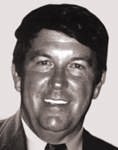
Hamilton

JWR contributor Chris Matthews is the author of Hardball. and hosts a CNBC show of the same name. Send your comments to him by clicking here.

05/23/00: Who typifies leadership?
05/19/00: Bubba's legacy involves AIDS
05/16/00: Dubyah's outlook for 'playoffs' remains perilous
05/11/00: Giuliani's travels
05/09/00: A Yale degree, a Bob Jones education
05/03/00: Show of force!
05/01/00: Abortion polls don't reflect reality
04/28/00: Bill Russell and American racism
04/24/00: Vietnam 25 -- The good, bad and ugly
04/19/00: Nader's threat to Gore in California
04/17/00: Berkeley politician visits with Elian's father
04/14/00: Clinton and the Castro curse
04/11/00: Men who saved Eliαn from the sea
04/06/00: Caine should coach politicians
04/03/00: No. 2 spots: Woman-to-woman?
03/29/00: Gray for veep and Gore might coast to victory
03/27/00: The secret life of a CIA wife
03/22/00: 'We're suckers for underdogs'
03/20/00: Bush's California dream vs. reality
03/06/00: Scary Gore vs. hopeful Bush
03/06/00: McCain's appeal to 'Reagan Democrats'
03/01/00: John McCain fits a hero's profile
02/28/00: Grading the American presidents
02/25/00: Clinton remains No. 1 issue
02/23/00: Will Ross Perot aid POW McCain?
02/18/00: McCain faces fury of GOP establishment
02/17/00: Citizen Springer
02/14/00: McCainia and the frisky independents
02/07/00: A prime-time primary for California
02/02/00: Clinton's final campaign: Take the blame
01/31/00: Which GOPer is willing to pay for his positions?
01/27/00: John McCain's gay radar
01/25/00: This time, candidates get 'authenticity' check
01/18/00: AIDS dooms 1 in 4 in tiny Swaziland
01/13/00: Complacency might be the campaign key
01/10/00: A choice, not an echo
01/06/00: The role of a lifetime
01/03/00: Dangers in Gore's dirty war
12/30/99: Churchill's fighting words saved the century
12/28/99: Candidate Gore's separation anxiety
12/17/99: Catch 22: Leading candidates don't lead
12/17/99: New Democratic leader on the horizon
12/15/99: Is Hillary clueless?
12/08/99: Taking Buchananism to the streets
12/03/99: Why are we so obsessed with 'spin'?
12/01/99: Donald Trump, 'Sinatra of Steel'
11/29/99: Why AlGore will be our next president
11/23/99: After the fall
11/17/99: Our conveniently forgetful president
11/15/99: Next president: Male, WASP, self-selected
11/10/99: Backroom Bill
11/08/99: Please don't feed the 'pander bears'
11/03/99: Battle of the Bubba clones
11/01/99: Pat Buchanan, kamikaze candidate
10/27/99: The year of the woman... voter
10/25/99: The Curse of the Bubba
10/21/99: GOP gives Clinton his finest hour
10/18/99: Clinton's last hurrah
10/13/99: Rough seas for Capt. Ventura
10/11/99: Gore targets Bradley's strength
10/06/99: Bradley's got the right Rx
10/04/99: Buchanan, Churchill and Hitler
09/30/99: Who'll spin political gold in Golden State — Gore or Bradley?
09/27/99: Here's a millennial checklist for candidates
09/22/99: The biography battle
09/20/99: Buchanan's new book is a must-read
09/15/99: Don't rule out Beatty
09/13/99: The man with the sun on his face
09/08/99: W. vs. Jr. on dope and the draft
The FALN: Hillary's Willie Horton
08/26/99: Bill's guilt fuels Hill's race
08/25/99: The seemingly inexhaustible strength of America's free enterprise
08/23/99: GOP candidates are weak also-rans
08/16/99: Bubba on Bubba
08/11/99: Hillary's agonizing attempts to understand
08/09/99: With warm regards, Richard Nixon
08/04/99: Weicker: real third party is on the Left
08/02/99: Dubyah's last hangover
07/27/99: Ho, Ho, Ho Chi Minh; capitalism is gonna win