
Jewish World Review June 25, 1999 /11 Tamuz, 5759
 |
| Boxer |
Tim Boxer
AT FIRST BLUSH it would appear that everyone at a Shenkar College event has
to have some connection with textiles, couture, design or the Garment Center.
So it was not surprising that the American committee for Israel's fashion and
textile technology college chose to bestow its annual International
Entrepreneur Award on Halina and Samson Bitensky of FAB Industries in the US,
Sir Richard Greenburg of London's Marks & Spencer, and Brazil's Hans Stern of
H. Stern jewelers.
But what was Martin Indyk, assistant secretary of state for Near Eastern
affairs, doing at this dinner at New York's Rainbow Room?
"My father used to make suits for the Russian czar," Indyk explained.
The English-born diplomat surely has the credentials to appear at a Shenkar
event.
Nahum Shar, president of the American committee, said that Shenkar is
contributing to peace by breaking barriers and bringing people together.
"Jordanians are asking, what has peace brought us? Shenkar has the answer. It
is training Jordanians in textiles. We are playing a critical role in
improving people's lives in Israel and Jordan."
In presenting the award to Britain's Sir Richard Greenburg, Stephen Rubin of
the Pentland Group offered a story:
Three buyers went abroad and were captured by bandits. Before executing them,
the bandits gave them a choice for their last supper.
"Strawberries are out of season," the bandits told him.
"I'll wait," the Brit said.
Saving His People
Cyrus Abbe, who's been involved in the rescue of Jews from the Soviet Union,
Syria and Ethiopia, was honored on his 60th birthday by the North American
Conference of Ethiopian Jewry, a group he founded.
Attorney Shannon Taylor told how Cyrus got him to bring his client, Jackie
Mason, to entertain an assembly of Syrian Jews in Brooklyn.
"We raised $80,000," Shannon said. "That's Jackie's fee, which he never saw.
I never saw my cut. That was the beginning of the campaign to save Syrian
Jewry."
Rabbi Ephraim Buchwald said that when Cyrus travels around the world he
always finds new kashrut symbols. Recently he discovered Danny K, K Sera
Sera, and K-Mart.
"How many people does it take to screw in a light bulb in the Abbe home?" the
rabbi asked.
"None. Cyrus lights up the world."
Saloonkeeper to the Stars
Peter Kriendler, at 94 the last of the Kriendlers who operated the '21' Club
from 1930 until it was sold in 1987, looks back with immense pride at the
world-famed institution his brother Jack founded with Charlie Berns.
He starts his autobiography: "So how did a nice Jewish fella with a law
degree wind up as a saloon keeper?"
Born in Brooklyn but raised on the Lower East Side in a family of four boys
and four girls, Mr. Pete, as he was known in the restaurant, never lost sight
of what the family really ran - a saloon.
It started out as an illegal speakeasy, an underground joint for the unlawful
sale and consumption of bootleg liquor.
When efforts were made to put a stopto drinking in the Union army,
enterprising merchants would conceal bottles of booze in the tops of boots,
thus creating a new entry in the dictionary: "bootlegger."
You learn much about Prohibition, when '21' thrived even while local
officials made unsuccessful attempts to crack down on the celebrity saloon.
Pete's brother Jack foiled the authorities by building a cellar warehouse to
store the thousands of bottles of wine and liquor. The cellar was protected
by a massive brick wall. The door was made so heavy that it could be opened
only by inserting a long thin rod through a tiny hole at the bottom.
No burglar, gangster or lawman ever discovered the concealed cellar, still in
use to this day.
One person who was let in on the secret was "Gentleman Jimmy" Walker. There's
a booth preserved in the corner of the cellar where New York's irrepressible
mayor "passed many a clandestine evening, confident that even if there
happened to be a raid on the joint, no one would find him."
The cellar, a veritable museum of booze, contains the finest collections in
the country of claret and Burgundy, champagnes and spirits.
"A wine lover," Mr. Pete says, "once got trapped in the cellar when an
electric lock malfunctioned, and he was invited to help himself to anything
in the bins while he waited to be rescued. He was so overwhelmed by the
choices that nearly an hour later when the door was opened he was still
trying to decide."
Drunks and snoops were barred from the club.
Actually Jackie Gleason was the only person allowed inside who was drunk.
Walter Winchell was barred because he'd go around trying to pick up gossip.
Katharine Hepburn was the first woman admitted in slacks.
You get the picture: the speakeasy evolved into a venerable American
institution that catered to the American elite, from the barons of commerce
to the icons of celebrity.
Through it all Mr. Pete was always proud of his roots as a Jew. He was also
acutely aware of his origins as a saloonkeeper.
The only difference between a saloon and a club, he liked to point out, is
that in a club you wore a tie and jacket.
Boxer Shorts
· Carol Grill Romany in the Beersheva Hilton has a unique dish on the menu:
Bull testicles, 20 shekels per 100 grams. (Don't ask, I didn't order.)
· Kosher Delight on Broadway boasts the best supervision: "Mashiach on
premises."
· Ron Silver said he once had a seder at his house where Mayor Rudy Giuliani
"not only answered the Four Questions but insisted his answers were right and
everybody else's were not."
· Israel has its own Y2K problem - what to do with the more than 4 million
expected tourists.
· Lillian Lux received a Lifetime Achievement Award from the Lower East Side
Development Corp. at the Grand St. fair June 13.
The House Wit
Mickey Marvin says his wife tried everything to lose weight. She even
went horseback riding. It worked - the horse lost 40
06/01/99: A Tree Grows In Newark
You Never Know
The former US Ambassador to Israel added, "My father would bring out the
medals that the czar gave him for his service. Furthermore, my grandfather
was one of the biggest shmatta manufacturers in New Zealand."
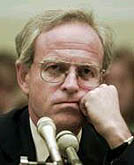
Indyk
 The Italian buyer opted for a pepperoni pizza. Then they shot him. The
Frenchman chose a filet mignon. After that they shot him, too. The British
buyer asked for a plate of strawberries.
The Italian buyer opted for a pepperoni pizza. Then they shot him. The
Frenchman chose a filet mignon. After that they shot him, too. The British
buyer asked for a plate of strawberries.

 You pick up on American history in Mr. Pete's life story, "21: Every Day Was
New Year's Eve" (Taylor Publishing).
You pick up on American history in Mr. Pete's life story, "21: Every Day Was
New Year's Eve" (Taylor Publishing).
In 1998 there were vintages reserved for John Huston, Richard Nixon, Burgess
Meredith, Elizabeth Taylor, Ronald Lauder, Gerald Ford and Ivan Boesky. Also
champagne stored for Chelsea Clinton's 21st birthday.

Liz

JWR contributor Tim Boxer is the celebrity columnist of the
New York Jewish
Week and author
of Jewish Celebrity Hall of Fame and Jewish Celebrity
Anecdotes. Send your comments to him by clicking here.


05/17/99: Rock and religion