|
|
|
Jewish World Review May 2, 2003/ 30 Nissan, 5763
Jonathan Tobin
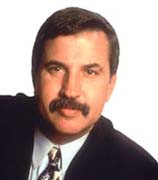
Good Tom, Bad Tom
Burdened with an oversized ego that sometimes leads him to egregious misjudgments, Friedman's work has
often been more of a hindrance to serious thought about the Middle East than anything else.
This was amply illustrated last year when the columnist's pretensions were brutally exposed by Saudi Prince
Crown Prince Abdullah, who led the Timesman to promote a so-called Saudi "peace plan." The media world
was so impressed with Friedman's access and ability to promote himself that few noticed that this plan was
little more than a well-timed hoax aimed at putting pressure on Israel.
The buzz from this so-called scoop did nothing to advance peace, but it did help lift Friedman to an
unprecedented third Pulitzer Prize. In Friedman's case, being a best-selling author, television talking head and
the leading pundit on the world's most influential paper means never having to say you're sorry.
His relentless criticisms of Israel are sometimes matched by honesty about the failings of the Arab world, but
the latter often have more to do with his pique at the Arabs' refusal to take his advice. He is usually unable to
complete a column on the subject without launching into a bitter attack on Israel for failing to make
concessions to appease the same Arab tyrants whom he despises.
But every once in a while, Friedman is capable of getting a subject exactly right. His April 27 column, "The
Meaning of a Skull," was an example. In this piece, Friedman said that the Times' publishing of a front-page
picture of a recently exhumed skull from a graveyard where executed political prisoners in Iraq were dumped
was an apt metaphor for the recently concluded war.
"As far as I'm concerned, we do not need to find any weapons of mass destruction to justify this war,"
Friedman wrote. "That skull, and the thousands more that will be unearthed, are enough for me. Mr. Bush
doesn't owe the world any explanation. ... It is clear that in ending Saddam's tyranny, a huge human engine for
mass destruction has been broken."
Friedman went on to ponder why "isn't everyone celebrating this triumph?" The complex nature of Middle East
politics is one reason. But he also put much of the sniping at Bush and the refusal to acknowledge the
wisdom of his decision to go to war down to partisanship on the part of many Democrats.
He thinks Arabs refuse to tell the truth about the war because too many Arab regimes resemble Saddam's
Iraq, and because of their own shame that it took Americans, rather than Arabs, to free that country. "The
challenge for the Arabs, France and Russia is to get over the fact that Mr. Bush did something good, and roll up
their sleeves to help make it last," said Friedman.
That's a point few journalists with the liberal internationalist credentials of a Tom Friedman have chosen to
make.
Even more remarkable is that Friedman made it through the end of this column - without once blasting Israeli
Prime Minister Ariel Sharon! No doubt he'll make up for that shortfall soon, but for one day at least, the
country's most influential foreign-policy pundit had told the unvarnished truth without reverting to type.
JWR contributor Jonathan S. Tobin is executive editor of the Philadelphia Jewish Exponent.
Let him know what you think by clicking here.