
|
|
|
http://www.jewishworldreview.com --
AS an undergraduate at UC Santa Cruz, I was heavily involved in
the student theater scene. During my travails into the world of the stage, I became friendly
with a Japanese woman – let’s call her Jenny – who was one year my junior.
Jenny had been raised in the concrete jungle of middle-class Orange County, as I had, so we had
many a laugh discussing the pros and cons of growing up a suburb brat.
For the most part, Jenny and I stayed true to our centrist OC roots despite the air of radical
liberalism that reared its infectious head on campus. I considered myself a moderate
Democrat, receptive to the newly evolving world of political correctness yet not blind to the
pitfalls of an overly sensitive society. Yes, I was surrounded by the children of the flower
children, with their hackysacks and patchouli incense and foot-long Mary J doobies. But I
remained steadfastly dedicated to flannel shirts and I didn’t believe in sticking it to
The Man or in selling my soul to Nature. In truth, by the time I graduated I was already on
the path to a much more conservative outlook.
Don’t get me wrong. UCSC is an excellent institution, though it is often difficult for a
new enrollee to resist the predominant attitude of the university’s faculty and student
body. That’s when people like Jenny get into trouble.
I had known Jenny for perhaps a year before she began hanging around with a group of
self-proclaimed feminists who were grappling with their sexuality and voraciously searching for
ways to castrate their male peers. It was not long before these gorgons had convinced Jenny
that she was a victim of years of oppression and that she better well do something about it.
Well that something showed itself in the form of a play that she wrote about the domination and
molestation of Asian cultures by Caucasians.
Now I’m fairly certain I’ve been called a kike once or twice and I remember a time
when one of the sub-intellectual jocks at my high school chalked a swastika on the blackboard
while the teacher sat idly by. But I hardly consider my Irvine upbringing to have been a test
of endurance. There were idiots, sure, but nobody ever slapped a gold star on my lapel and
ordered me to lick the sidewalks clean. And I think it is safe to assume that my Japanese
friend never saw the inside of an internment camp during her MTV-watching days in Huntington
Beach.
Nevertheless, the show went on. And it turned out to be a fiasco.
The play was essentially composed of a group of Asian actors positioning themselves at various
spots onstage and throwing insults at all the white faces in the audience. It was sickening.
Fortunately, the cry of “Victim!” cleared the beach. Many audience members walked
out of the theater in a huff. Others stayed until the end, most likely out of respect for the
performers (which certainly was not mutual), but grumbled their disgust as they tromped back to
their cars.
When I asked Jenny how she felt about people walking out of her show, a huge grin crossed her
face and she told me she couldn’t be happier to have affected so many people so
intensely. I asked her if it might have been better to present her views in a way that
wouldn’t insult her patrons, most of whom had paid for their tickets. She balked.
It’s better to go for the jugular, she said.
Indeed she did go for the jugular. The final line of the play was directed to a randomly
chosen white audience member by one of the Asian actresses. With her fists clenched at her
sides she said, “You are not part of the rainbow, my friend.”
In good humor, I told Jenny that white is actually the most important color of the rainbow
because the spectrum of colors cannot exist until white sunlight enters a raindrop and refracts
at the surface.
She didn’t think I was funny.
A big part of Jenny’s script was her declaration that white people who use Oriental
symbols to express themselves are so-called “culture vultures.” It was
Jenny’s insistence that whites had no right to tattoo Oriental lettering on themselves or
wear chopsticks in their hair. She called it a mockery of her culture. The only exception to
the rule, she said, is if the white guy wearing the kimono sash has a clear understanding of
the history and cultural significance of his garb and uses that knowledge to treat it with the
respect it deserves. I wondered how one goes about policing that sort of thing, but I kept my
mouth shut.
Our friendship came to a head one night as we were chatting in Jenny’s dorm room. She
took a phone call and as I was scanning a few newly hung items on her wall, I noticed that she
had used thumbtacks to crudely position a Challah cover above her work area. When I had her
attention again, I asked her about it. She told me that a friend had made it for her and that
she thought it was beautiful. I agreed that it was beautiful and asked her if she understood
the significance of the Challah cover.
I was answered with silence.
The Challah cover, I explained to my speechless friend, is used to conceal the Challah bread
while the blessing over the wine, or Kiddush, is being recited. The reason for this is to
spare the Challah the humiliation of watching the wine receive the first blessing. Of course a
loaf of bread cannot actually be humiliated, but the ritual is used to remind Jews honoring the
Sabbath to be sensitive to one another’s feelings. It is a very old tradition, I
explained, that is a significant part of the Sabbath festivities. And the Sabbath itself is
the most sacred of Jewish celebrations.
I asked Jenny why she decided to tack a Challah cover to her wall thereby, as many Jews would
argue, desecrating it?
Again, there was no answer. She rarely spoke to me after that.
But I did see much more of Jenny. There was the time when she interrupted one of my theater
classes wearing a black hooded robe (a sort of photographic negative of a Klan outfit, if you
will) and demanded that the professor devote some class time to gay and so-called
“ethnic” authors. Never mind the fact that the professor was gay. And never mind
the fact that the day she marched into the classroom we were studying the works of gay
playwright Joe Orton and award-winning playwright Maria Irene Fornes, a Hispanic lesbian. Doh!
Somebody didn’t do her homework.
Jenny ended up taking over six years to graduate from the university, which goes to show just
how much this type of emotional, wrong-headed, hypocritical, ignorant, and to borrow a Larry
Elder term, victocratic attitude stymies one’s progress. No one ever climbs the social
and professional ladder by whining and blindly throwing their anger around when there is simply
nothing to whine or be angry about. Those who share Jenny’s mind-set would do well to
heed the advice of an ex-girlfriend of mine who whenever I would complain about anything would
say:
Get over
Jewish World Review Sept. 15, 2000 / 14 Elul 5760
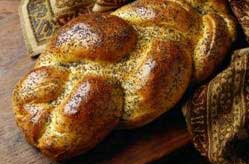 The challah on the wall
By Eyal Alony


Eyal Alony holds a B.A. in Theater Arts from the University of California at Santa Cruz. He
resides in Los Angeles where he is an online content writer and a playwright. He is currently
at work on his fifth play. Comment by clicking here.
