 |
Jewish World Review /Jan. 8, 1999 /19 Teves, 5759
|
|
Jewish World Review /Jan. 8, 1999 /19 Teves, 5759
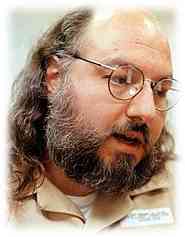 |
| Pollard |
(JWR) ---- (http://www.jewishworldreview.com) PRESIDENT CLINTON IS SCHEDULED TO CONCLUDE another review of the Jonathan
Pollard case next week. The latest clemency review is the sop offered by
Clinton after reneging on his unequivocal promise at Wye to release Pollard.
No defender of Pollard has been heard on his behalf. His fate will again
be decided on the basis of information supplied solely by those determined
to see him die in jail.
Unlike Alfred Dreyfus, Pollard is not innocent. He committed a serious
crime for which he has already served a longer sentence than anyone ever
convicted of the same offense, for which the average prison term is two to
four years. But just as the Dreyfus case was an indictment of French
justice, so is the Pollard case a stark indictment of American justice.
Pollard was charged and pleaded guilty to one count of delivering defense
information with intent to aid a foreign nation -- i.e., Israel, a staunch
American ally. As in any espionage case, the U.S. government was eager to
avoid a trial and the inevitable exposure of intelligence secrets entailed.
And it was doubly eager in Pollard's case because a trial would have
revealed how the U.S. had failed to fulfill its treaty obligations to supply
intelligence data to Israel and the full extent of its tilt to Iraq in the
early '80s, which included countenancing Iraq's missile buildup and
development of weapons of mass destruction.
Lest there be any doubt of the strength of Pollard's bargaining position,
consider the case of Aldrich Ames. For large payments to support a lavish
lifestyle, Ames exposed over 30 American agents to the Soviets, leading
directly to their executions. He nevertheless secured in return for his plea
bargain assignment to minimum security prison, where he has his own private
room and TV, no work requirement, and access to an 18-hole golf course.
Meanwhile Jonathan Pollard shares a cell with four other inmates, works
eight hours or more a day, and is denied kosher food. And that's a picnic
after seven years in a hospital for the criminally insane and subsequently
in isolation in America's toughest federal prison.
In return for his plea bargain, Pollard received the maximum sentence under
the statute -- in short, a "bargain'' in which one side received absolutely
nothing. Government prosecutors made three promises to Pollard: that they
would not ask for a life sentence, that they would inform the court of the
great importance of his cooperation in the assessment of damage from his
activities, and that they would limit their presentation to the court to the
"facts and circumstances of the case.'' The prosecutors broke, in the words
of D.C. Circuit Court Judge Stephen Williams, every one of these promises in
spirit and the third in letter as well.
Mention of Pollard's cooperation -- including nine months of interrogation
and 52 polygraphs -- was tucked away in the middle of a section of the
government's submission detailing why he should receive a substantial
sentence. Far from limiting themselves to the "facts,'' the government
prosecutors loaded their submission with the most conclusory allegations of
Pollard's venality, addiction to a high lifestyle, arrogance and
deceitfulness -- allegations moreover belied by the fact that Pollard
initially volunteered his information to Israel and it was his handlers who
insisted on relatively small payments.
Though he did not explicitly ask for a life sentence, the chief prosecutor
later told reporters that he hopes Pollard "never sees the light of day
again.'' And he acted accordingly. Most damaging, of course, was the last
minute submission of then Defense Secretary Caspar
Weinberger.
Pollard and his attorneys were never given a copy of the allegations
presented to the sentencing judge by Weinberger, and were thus unable to
rebut them. It is harder to imagine a greater affront to due process right
to confront one's accusers.
In the public part of Weinberger's submission he labelled Pollard a
"traitor,'' a crime of with which he was not charged and was not guilty.
Weinberger told the judge that he could not imagine a crime "more deserving
of a severe punishment'' or which had done "greater harm to national
security,'' all but demanding the maximum sentence.
Jonathan Pollard was thus sentenced for the crime of damaging the United
States -- a crime with which the government had explicitly refrained from
charging him. By implication, Israel was transformed into an enemy. Compare
the case of Navy commander Michael Schwartz, who sold secrets to the Saudis.
Schwartz's only punishment was a less than honorable discharge, and nary a
word of criticism of the Saudis was heard.
Weinberger had good reason to be piqued with Pollard. He favored keeping
Israel vulnerable, and Pollard reduced that vulnerability. But the claim
that Pollard damaged U.S. security interests will not bear scrutiny. Angelo
Codevilla, who as chief counsel to the Senate Intelligence Committee in 1985
had access to the full Pollard file, recently stated flatly, that while
Pollard subverted Washington's then pro-Iraq and pro-Arab policy, he barely
affected intelligence operations: "No U.S. communication intercept system
was taken out of service or had its budget affected . . .; nor was any U.S.
agent `forced out of the cold.'''
President Clinton is fond of lecturing Israel on the importance of
confidence-building measures. Israel herself could use some such
confidence-building measures, especially when Pollard's chief persecutors
seem to be the same CIA charged with policing the Wye Accords. In seeking
those measures, let us recall as Jews and Israelis, the words of the
Shulchan Aruch, "There is no greater mitzvah than the redemption of captives.''
Related:

JWR contributor Jonathan Rosenblum is a columnist for the Jerusalem Post and is the author of several biographies of contemporary Jewish leaders.
11/19/98:The Spy Left Out In the Cold Too Long
11/11/98:
Pollard hopeful
GOP changes will
benefit him
10/28/98:
Peace process
or spin politics?

